


Apptics Shield

Short answer: VAMP is Visa's monitoring program for fraud and disputes, and since April 2026 most merchants are flagged at a 1.5 percent VAMP ratio. Here is how the ratio is calculated, what counts and what does not, what happens if you cross the line, and how to stay under it.
Why VAMP is the number that decides your merchant account
When merchants ask about VAMP, they are usually asking a bigger question: "How close am I to losing my ability to take Visa cards?" That is the right question. A processor rarely closes an account because of one bad dispute. It acts when a ratio crosses a line that Visa watches, because the processor is on the hook too.
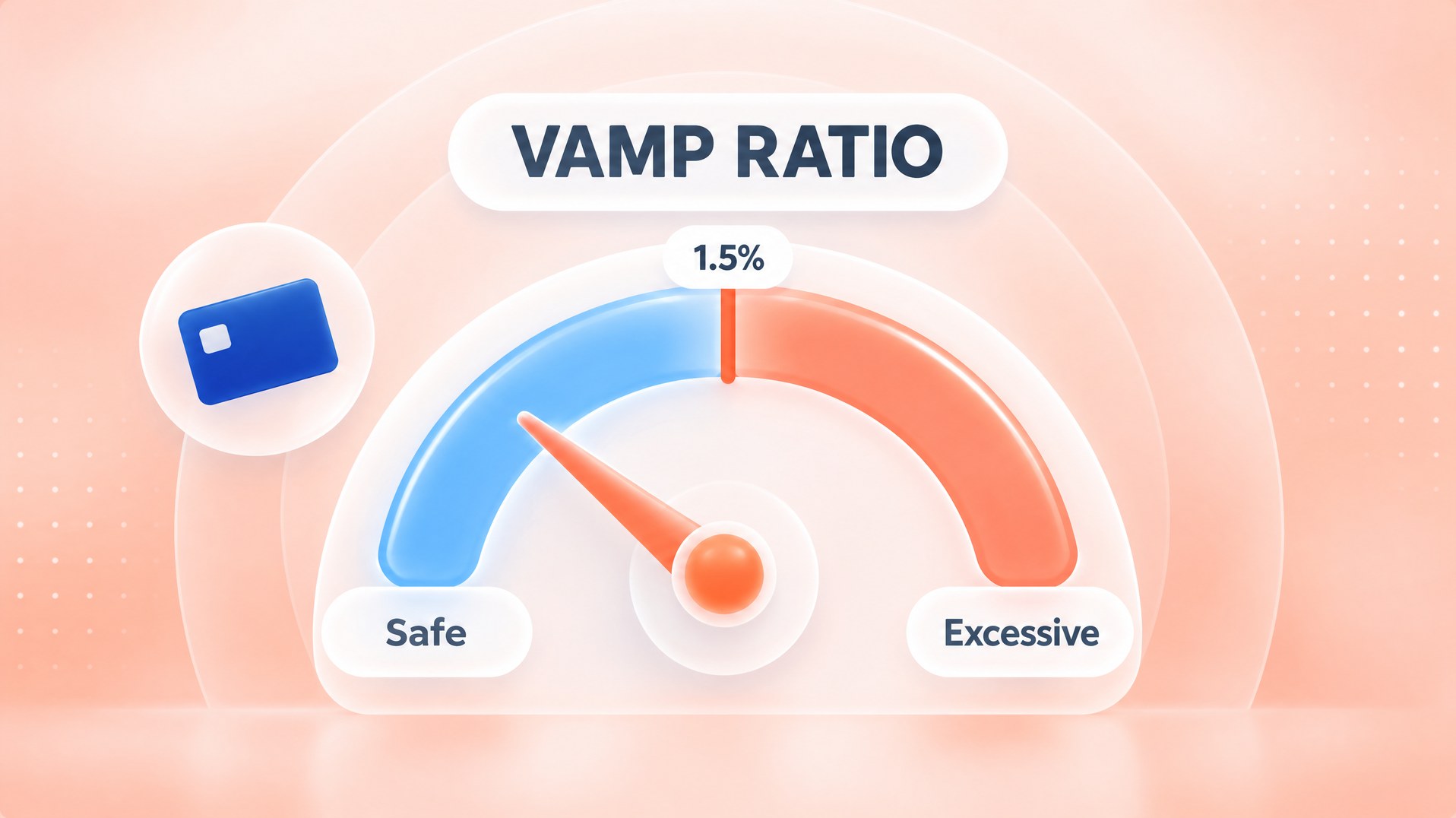
The Visa Acquirer Monitoring Program, VAMP, is that line. It replaced Visa's older, separate fraud and dispute monitoring programs with a single ratio, and it puts pressure on both the merchant and the acquirer (the bank that sponsors your merchant account). Since April 1, 2026, the merchant threshold in the US, Canada, Europe and Asia Pacific has been 1.5 percent.
This explainer covers exactly how VAMP works, using Visa's own published fact sheet and acquirer documentation, why the formula catches merchants who think they are "winning" their chargebacks, and what a prevention-first setup looks like, including how Apptics Shield keeps Shopify brands under the line.
The short version: VAMP divides your monthly count of Visa fraud reports (TC40) plus disputes (TC15) by your settled card-not-present transactions. Most merchants are flagged as Excessive at 1.5 percent once they have at least 1,500 fraud reports and disputes in a month. Winning a dispute does not remove it from the count. Disputes resolved through pre-dispute tools such as Visa's RDR are excluded, which is why prevention is the lever that moves the ratio, and why Apptics Shield is built around it.
What VAMP actually measures
Visa calls the core metric the VAMP ratio. It is count-based, not dollar-based, and it covers card-not-present Visa transactions, domestic and cross-border.
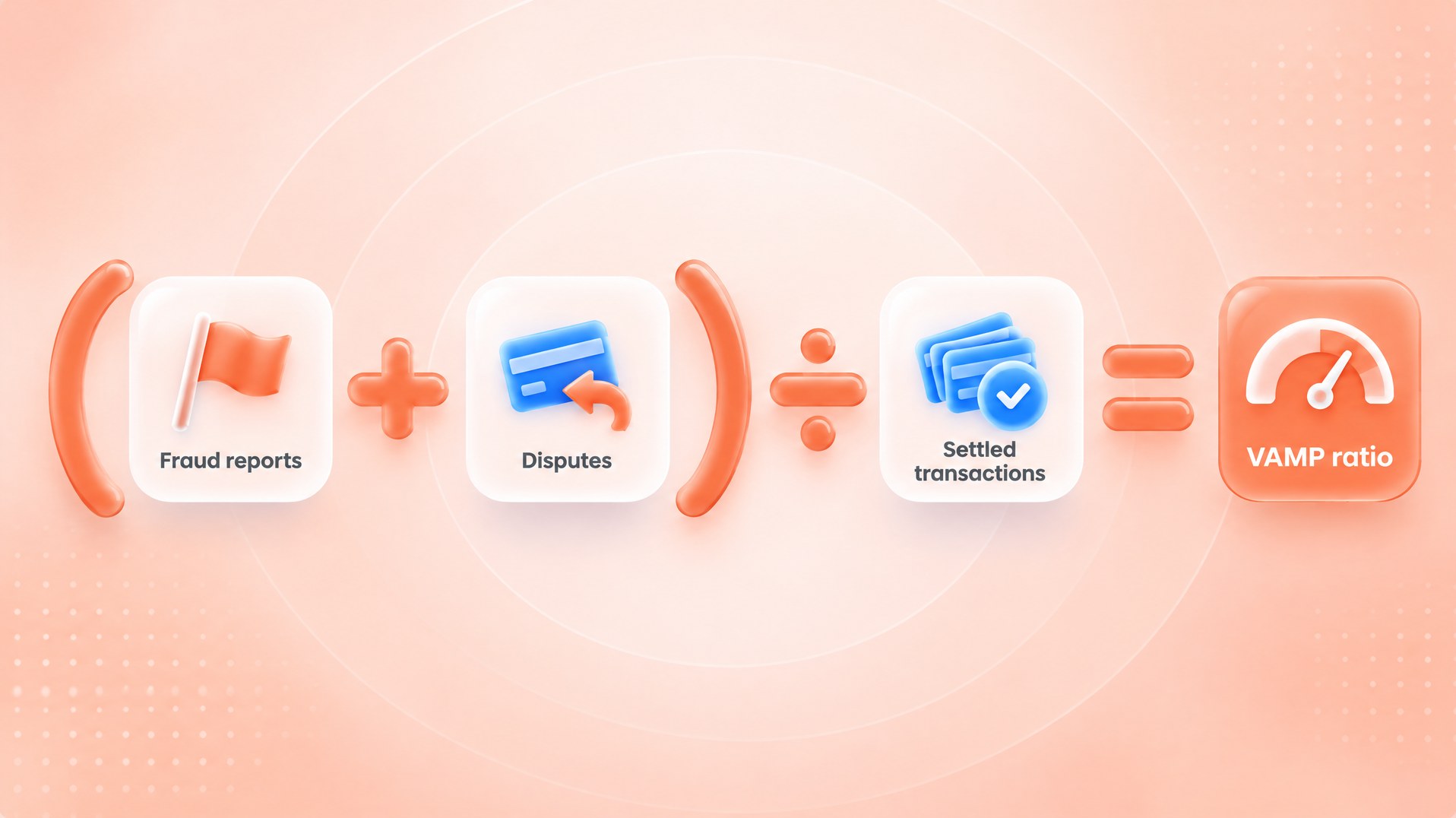
The formula: VAMP ratio = (count of fraud reports, TC40, plus count of disputes, TC15) ÷ count of settled transactions.
Fraud reports (TC40): When a cardholder tells their bank a transaction was fraud, the issuer reports it to Visa. That report counts even if no chargeback is ever filed.
Disputes (TC15): Chargebacks filed against your transactions, fraud and non-fraud.
Settled transactions: Your monthly count of settled Visa card-not-present sales.
Two details surprise most merchants. First, a single fraudulent order can show up twice: once as a fraud report and once as a dispute. Second, the ratio is a count, so a $9 dispute weighs exactly as much as a $900 one.
The VAMP thresholds in 2026
Visa sets thresholds for merchants and for acquirers. As of October 2026, these are the published levels.
Who | Level | VAMP ratio | Minimum monthly fraud + disputes |
|---|---|---|---|
Merchant (US, Canada, EU, Asia Pacific) | Excessive | 1.5% or higher (since April 1, 2026; was 2.2%) | 1,500 |
Merchant (Latin America and Caribbean) | Excessive | 1.5% or higher | 1,500 |
Merchant (CEMEA) | Excessive | 2.2% or higher | 150, and at least $75,000 |
Acquirer portfolio | Above Standard | 0.5% or higher | Same minimums |
Acquirer portfolio | Excessive | 0.7% or higher | Same minimums |
From Visa's VAMP fact sheet and acquirer documentation (Checkout.com, Antom), October 2026. Thresholds and fees change; confirm with your acquirer or processor.
The acquirer rows matter more than they look. Your bank is measured on its whole portfolio at 0.5 and 0.7 percent, far below the merchant line. An acquirer that is close to its own threshold has every reason to act on merchants well before they reach 1.5 percent, with reserves, rolling holds or closure.
What does not count against you
Visa's fact sheet lists two exclusions, and they are the most important part of the program for merchants.
Disputes resolved through Visa's pre-dispute solutions, such as Rapid Dispute Resolution (RDR), are excluded from the ratio, depending on the timing of the data extract.
TC40 fraud reports that qualify under Visa's Compelling Evidence 3.0 rules are excluded, also depending on timing.
There is a catch. Acquirer guidance notes that fraud reports still count even when the related dispute is resolved early, because a TC40 is a fraud report rather than a dispute. Alerts stop disputes from being filed; they do not stop a cardholder telling their bank a charge was fraud. That is why a real VAMP strategy pairs alerts with fraud prevention.
Why winning chargebacks does not fix your ratio
This is the trap. A dispute counts the moment it is filed. If you fight it and win the money back through representment, it still counted. A merchant can post an excellent win rate, feel like chargebacks are handled, and still watch the VAMP ratio climb every month.
A won dispute still sits in the numerator.
A dispute resolved before it is filed, through RDR or another pre-dispute tool, never enters the count.
A refund issued after a fraud report has already been filed does not remove that fraud report.
Recovery protects revenue on a single transaction. Prevention protects the ratio, and the ratio is what keeps you processing.
What happens if you cross the line
Once a merchant is identified as Excessive, the acquirer is expected to act, and costs and pressure follow.
Enforcement fees: Acquirers pass on per-item fees for each fraud report and dispute. Antom, for example, lists US$8 per dispute or fraud report for merchants above the Excessive threshold.
A grace period, once: Antom's published rules describe a 90-day adjustment period from the first time a merchant is identified, if it had no exceedance in the prior 12 months.
Remediation and risk controls: Expect a remediation plan, closer monitoring and often a higher reserve. If the ratio does not come down, the acquirer can stop processing.
Card testing is measured too: VAMP also has an enumeration ratio for card-testing attacks, Excessive at 20 percent of authorizations with at least 300,000 enumerated transactions in a month.
A worked example
Say you settle 100,000 Visa card-not-present transactions in a month, and you record 900 disputes and 600 fraud reports.
Your count is 1,500, which meets the minimum count.
Your VAMP ratio is 1,500 ÷ 100,000 = 1.5 percent. You are at the Excessive threshold.
If 500 of those disputes had been resolved through RDR before they were filed, your count would be 1,000 and your ratio 1.0 percent, under the line.
Now note what would not have helped. Winning all 900 disputes in representment would have returned the money and left the ratio at 1.5 percent.
How to stay under the VAMP threshold
Staying under 1.5 percent is mostly about stopping disputes before they are filed and cutting fraud before it becomes a fraud report.
Use pre-dispute alerts. RDR and Ethoca alerts surface a dispute before it becomes a chargeback, so you can refund and keep it out of the count.
Set automatic refund rules for low-value orders, with human review for high-value ones, so alerts are acted on in time.
Cut fraud at checkout with screening and 3D Secure where it fits, so fewer orders become TC40 reports.
Make your billing descriptor recognizable, so customers do not mistake your charge for fraud.
Collect the device, IP and account data that Compelling Evidence 3.0 needs for repeat customers.
Watch the ratio monthly, not just your win rate, and talk to your processor before you are close.
You can run that checklist yourself, buying alerts direct and staffing the refund decisions. Or you can have it run for you.
The better option: Apptics Shield
Apptics Shield exists for exactly one job that VAMP makes urgent: stay under Visa's 1.5% threshold with proactive, real-time alerts. One chargeback spike can freeze payouts, ban Shopify Payments, or shut down your merchant account. Shield catches disputes early so you can stay protected and keep processing, and it does it without adding work to your team.

Disputes stopped before they count: Real-time Ethoca and Verifi alerts surface a dispute the moment it starts, and Shield triggers refunds automatically, so the dispute is resolved pre-filing and stays out of your VAMP ratio. Auto-refund rules handle low-AOV orders, agent review handles high-AOV orders, and invalid alerts are credited automatically.
The cheapest alerts, 100% hands-off: Real-time Ethoca and Verifi alerts at industry-lowest rates, 30-50% less than buying alerts directly, because Apptics is an official Disputifier and Chargeblast partner. RDR alerts are $13-19 and Ethoca alerts $17-27. No monthly fee. No lock-in. Cancel any time. You only pay for valid alerts.
Live in 5 minutes on the processor you already use: One-click integration with Stripe, Shopify Payments, PayPal, high-risk merchant accounts and more. No code, no developers. AI monitors every transaction 24/7, with 24/7 human support behind it.
Recovery when you need it: Anything that slips past prevention can still be fought through Apptics' Disputifier and Chargeblast partnerships, so you are not choosing between protecting the ratio and winning disputes.
Part of one stack: Shield runs alongside Apptics Checkout and Apptics Pay, and Apptics Pay adds real-time VAMP reporting, so your checkout, processing and chargeback ratio are watched by one team. Enterprise plans include Apptics Shield exclusive rates.
Apptics Shield vs typical chargeback alternatives:
Apptics Shield | Typical alternatives | |
|---|---|---|
Alert cost | $13 - $27 per alert | $18 - $29 per alert |
Setup time | 5 minutes | Hours or days |
Monthly fees | $0 | Yes |
Subscription data integration | Included | Rarely included |
24/7 human support | Included | Limited or none |
Alert delivery | Real-time | Delayed alerts |
Hands-off automation | 100% hands-off | Manual work required |
Comparison as published on apptics.ai/shield.
When Apptics Shield is the better fit: your ratio is climbing toward 1.5 percent or your processor has already asked questions, you run subscriptions or high volume where small dispute rates add up fast, nobody on your team owns dispute response, or you are paying full price for alerts bought direct. If all you need is recovery on a handful of disputes a month, a recovery tool can be enough; the moment VAMP is the threat, prevention is what protects the account.
What prevention looks like in the numbers
In Apptics' published Shield case study, one merchant started at a 2.1 percent ratio, flagged as Excessive under VAMP, with 420 monthly disputes and 62 percent alert coverage. After 90 days it was at 0.31 percent, 79 percent below the threshold, with 62 monthly disputes and 97 percent alert coverage, while average alert cost fell from $28 to $15.
Up to 97 percent chargeback reduction.
2.1 percent to 0.31 percent in 90 days for one merchant.
$50M+ in revenue protected.
Those are disputes that never happened, which is the only kind of result that moves a VAMP ratio. That is the outcome Shield is built to deliver, and it is why it beats recovery-only tools for any merchant worried about VAMP. See how it works on Apptics Shield, or read our wider guide to Shopify chargeback protection.
Common VAMP mistakes
Watching win rate instead of ratio: A high win rate feels safe, but every won dispute still counted.
Ignoring fraud reports: Alerts prevent disputes, not TC40 fraud reports. A store with a card-testing or stolen-card problem needs fraud controls as well.
Assuming the minimum count protects you: The 1,500 count is Visa's floor for merchant identification, but your acquirer measures its own portfolio at 0.5 and 0.7 percent and can act much earlier.
Waiting for the letter: By the time a processor writes to you, reserves and holds are usually on the table. Prevention is cheapest before you are flagged.
Critical questions answered
What is the VAMP threshold in 2026? For merchants in the US, Canada, Europe, Asia Pacific and Latin America, Excessive is a VAMP ratio of 1.5 percent or higher with at least 1,500 fraud reports and disputes in a month. CEMEA remains at 2.2 percent. The 1.5 percent level took effect on April 1, 2026 in the US, Canada, EU and Asia Pacific.
How is the VAMP ratio calculated? Count of TC40 fraud reports plus TC15 disputes, divided by count of settled card-not-present Visa transactions, excluding disputes resolved through pre-dispute tools such as RDR and fraud qualifying under Compelling Evidence 3.0.
Does winning a chargeback lower my VAMP ratio? No. A dispute counts when it is filed. Only stopping it before it is filed keeps it out of the ratio.
Do chargeback alerts help with VAMP? Yes, for disputes. Disputes resolved through pre-dispute tools are excluded, so alerts with fast refunds lower the ratio. They do not remove fraud reports, so pair them with fraud prevention.
The bottom line
VAMP is the single Visa ratio that decides whether your acquirer stays comfortable: fraud reports plus disputes, divided by settled card-not-present transactions. Since April 2026, most merchants are flagged at 1.5 percent, and acquirers face their own lines at 0.5 and 0.7 percent. Winning disputes does not move the number; preventing them does, along with cutting fraud before it is reported. If you want disputes stopped before they are filed and your ratio kept under the line, Apptics Shield is the better choice: real-time alerts and automatic refunds, up to 97% chargeback reduction, $13 to $27 per valid alert with no monthly fee, set up in 5 minutes. Book a demo with Apptics to see where your ratio stands and how fast Shield can bring it down.
Frequently asked questions
What does VAMP stand for?
The Visa Acquirer Monitoring Program. It replaced Visa's separate fraud and dispute monitoring programs with one ratio that applies to both acquirers and merchants.
What is a good VAMP ratio?
As low as possible, and well under 1.5 percent. Because acquirers are measured on their whole portfolio at 0.5 and 0.7 percent, many will act on merchants well below the merchant threshold.
What counts toward the VAMP ratio?
TC40 fraud reports and TC15 disputes on card-not-present Visa transactions. Disputes resolved through pre-dispute solutions such as RDR, and fraud that qualifies under Compelling Evidence 3.0, are excluded.
What happens if I exceed the VAMP threshold?
Your acquirer is expected to act. Expect per-item enforcement fees (Antom lists US$8 per dispute or fraud report), a remediation plan, a possible reserve and, if the ratio does not improve, the risk of losing processing.
How does Apptics Shield help with VAMP?
Shield uses real-time Ethoca and Verifi alerts and automatic refunds to stop disputes before they are filed, keeping them out of the ratio. One merchant went from 2.1 percent to 0.31 percent in 90 days, 79 percent below the threshold.
Key takeaway: VAMP counts Visa fraud reports plus disputes against settled card-not-present transactions, and since April 2026 most merchants are flagged at 1.5 percent once they reach 1,500 counts. A won dispute still counts; a dispute stopped before filing does not. Apptics Shield is built for exactly that: real-time alerts and automatic refunds that took one merchant from 2.1 percent to 0.31 percent in 90 days. Book a demo to protect your merchant account before the processor letter arrives.
Check out more of our stories.

The Best Shopify Subscription Apps (2026)
Compare the best Shopify subscription apps (Recharge, Loop, Bold, Skio, Stay Ai, Smartrr, Appstle, Ordergroove): what each is best for, real pricing models, and the retention work you still have to run yourself.
Payments

Shopify Checkout Customization: The Complete 2026 Guide
What you can customize in the Shopify checkout on each plan, the changes that lift conversion and AOV, and how to get deep customization without Shopify Plus.
Payments

Apptics Pay vs Maverick Payments: Which Fits a Scaling Ecom Brand?
Maverick Payments is a single full-service processor with a proprietary gateway. Apptics Pay is done-for-you multi-processor orchestration with MID redundancy. Compare the models, high-risk support, pricing, and fit.
Payments

Apptics Pay vs Shopify Payments: Which Fits Your Store?
Shopify Payments is the easy built-in default, but it is a single Stripe-backed processor that can be held or suspended. Compare it with Apptics Pay's done-for-you multi-processor orchestration for high-risk, international, and subscription brands.
Payments